2026-08-21 · Roberto Morales
Steps To Take After Storm Surge Flooding In Miami Beach
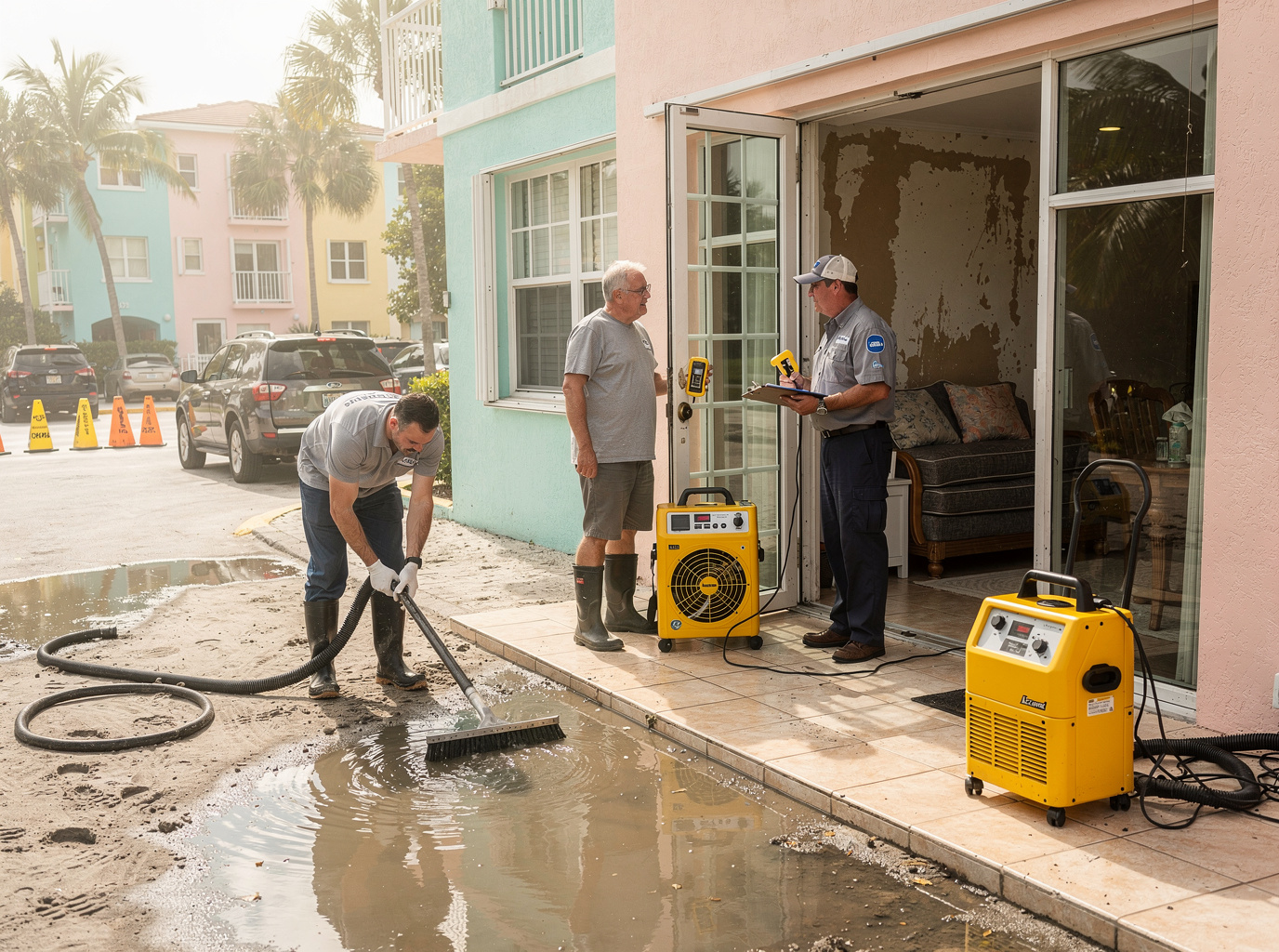
After storm surge flooding in Miami Beach, begin by securing power and avoiding contact with water until the source is confirmed safe. Then contact a restoration team for extraction while documenting everything for insurance. In Miami-Dade County the combination of high water tables and frequent tropical monsoon rains means water can linger under slabs and in wall cavities for days, raising mold risk fast.
Secure the Property and Address Immediate Hazards
Turn off electricity at the main breaker if water has reached outlets or appliances, and avoid entering rooms where water depth exceeds a few inches until professionals arrive. In Miami Beach neighborhoods built before modern elevation codes, surge often pushes saltwater into garages and first-floor living spaces, corroding wiring and HVAC components. Wear rubber boots and gloves, and keep children and pets away from affected zones. If you smell gas or see sparks, leave immediately and call utilities from outside. These first actions prevent shocks and slips that commonly occur on wet tile or terrazzo floors typical in older Coral Gables and Miami Beach homes. Once the site is stable, photograph water lines on walls and any damaged furniture before moving items to higher ground.
Remove Standing Water and Begin Extraction
Standing water must be removed within the first 24–48 hours to stop structural saturation in concrete block and wood-frame homes common throughout Miami Beach. Professional water extraction equipment pulls water from carpets, subfloors, and wall cavities that household vacuums cannot reach. In Miami-Dade County, surge water is often brackish and carries sediment from the bay, which settles into porous materials and accelerates deterioration if left behind. Focus first on rooms with hardwood or laminate flooring, as these swell quickly. After bulk removal, fans and dehumidifiers start the drying phase, but only after hidden moisture behind baseboards is checked with meters. Skipping this step leaves moisture that later migrates into adjacent units in multi-family buildings near the Design District or Overtown.
Dry Structural Materials and Prevent Secondary Damage
Once water is gone, thorough structural drying targets moisture trapped in drywall, insulation, and flooring underlayment. Miami’s hot wet summers keep relative humidity above 70 percent for weeks, slowing natural evaporation and encouraging mold on organic materials within 48 hours. Technicians place air movers and dehumidifiers in a closed-loop system, monitoring moisture levels daily until readings drop below 12 percent. In Brickell high-rises and low-lying Miami Beach condos, this often requires removing sections of baseboard to allow airflow behind walls. Homeowners can assist by opening windows only when outdoor humidity is lower than indoor levels, usually early morning. Consistent drying prevents warping of door frames and reduces the chance of musty odors that linger in Little Havana and Wynwood properties after past surge events.
Evaluate Mold Risks and Plan Restoration
Even after visible water is gone, hidden mold can develop behind walls or under cabinets in the humid Miami-Dade climate. Schedule a professional inspection before replacing finishes, especially in homes near the bay where surge reached living areas. If discoloration or odors appear, mold remediation follows containment protocols to avoid spreading spores to unaffected rooms. Residents in Coconut Grove and Coral Gables often discover growth weeks later when humidity spikes again. For a deeper look at seasonal patterns, review Mold Risks After Summer Floods In Coral Gables Homes. Final restoration includes treating affected wood, replacing insulation, and applying antimicrobial coatings where needed.
Track Costs and Continue Monitoring
Document every step with dated photos and receipts, as insurance adjusters in South Florida require clear evidence of progressive damage. Review Understanding Water Damage Restoration Costs In South Florida to understand typical line items such as extraction, drying equipment rental, and material replacement. Continue checking moisture levels for several weeks, particularly after heavy afternoon rains that are routine in the tropical monsoon pattern. If you notice recurring dampness near foundation walls or in crawl spaces, schedule follow-up testing. Papa Water Damage is available Mon–Fri 8am–6pm and Sat 9am–2pm to answer questions about next steps specific to your property.