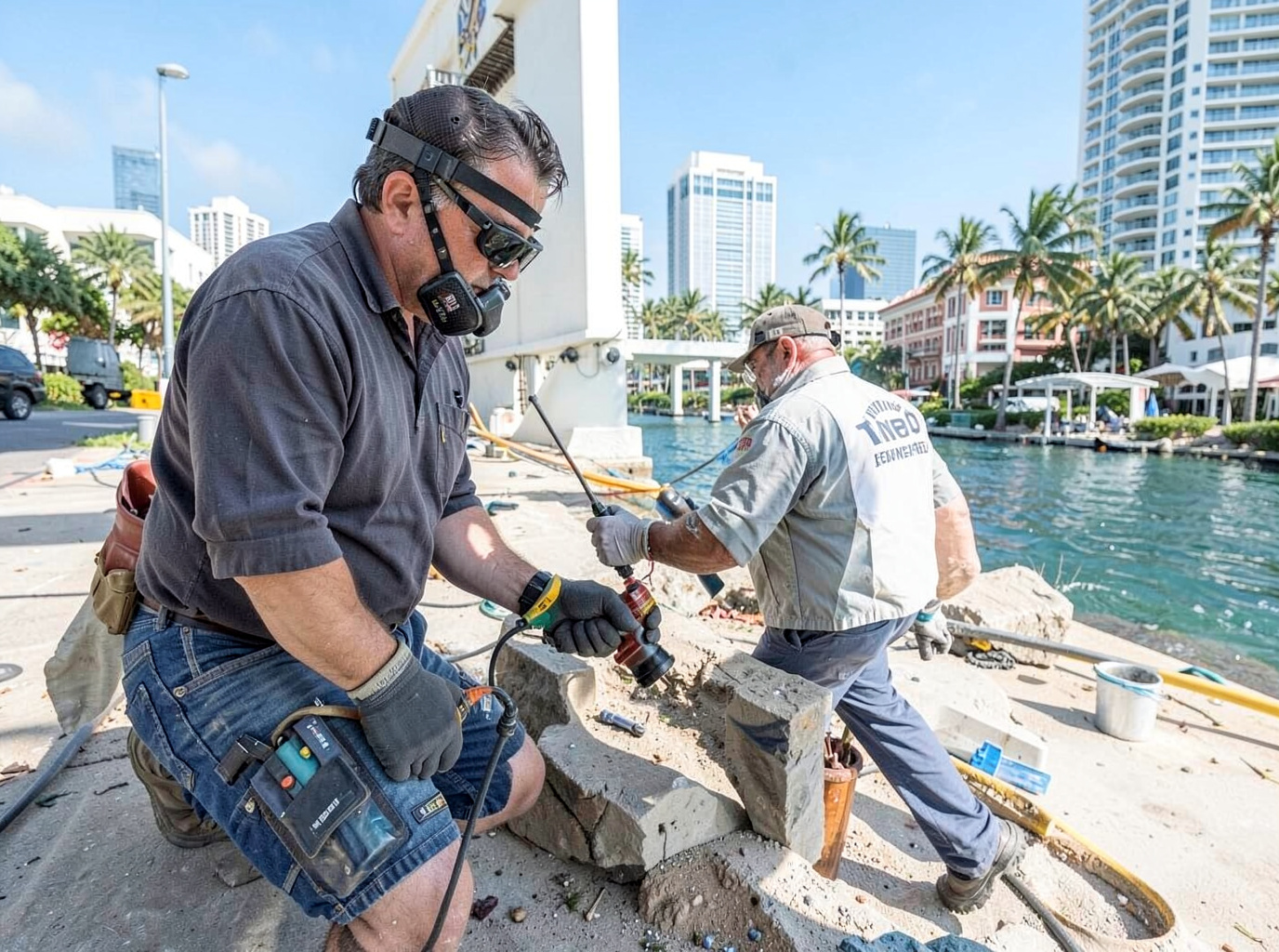
Miami's tropical monsoon climate brings months of high humidity that drive mold into drywall, HVAC systems, and attics even without obvious leaks. Homes built before 1980 in Little Havana and Overtown often lack modern vapor barriers, letting moisture from summer rains migrate through stucco and concrete block walls. Technicians must map moisture with thermal imaging before any demolition because hidden colonies behind tile in Coral Gables bathrooms or under Brickell condo flooring can spread quickly once disturbed.
Containment protocols change on multi-story properties near the Design District where shared walls and HVAC ducts connect units. Negative air machines and sealed corridors prevent spores from migrating into living spaces while removal crews cut out affected gypsum and treat framing with EPA-registered antimicrobials. Post-remediation air sampling confirms clearance before any reconstruction, especially important after flooding events that reach Freedom Tower or Bayside Marketplace neighborhoods.
HVAC systems in Coconut Grove and Hialeah properties frequently harbor mold on coils and in flex ducts because constant air conditioning cycles create condensation. Remediation here requires shutting down units, cleaning or replacing coils, and sometimes installing UV lights to limit regrowth during the wet season. Homeowners who skip these steps see colonies return within weeks once humidity climbs again.
Final clearance testing follows IICRC S520 guidelines and includes surface and air samples sent to independent labs. This step protects owners in Miami Beach and Coral Gables where real-estate transactions often require documentation of prior moisture issues before closing.
Technician insight
In Miami the thing that catches most people out with mold remediation is how quickly colonies return in pre-1970 concrete-block homes once summer humidity climbs above 70 percent; older stucco in Little Havana and Overtown traps moisture behind the finish and standard fans alone never pull it out.
Hidden Mold Behind Tile in Coral Gables Bath
A homeowner noticed musty odor after heavy rains but no visible water. Inspection found elevated moisture behind 1960s ceramic tile on an exterior wall. Crew removed the tile and saturated drywall, treated the block, installed new moisture-resistant backer, and verified clearance with air sampling before tile replacement.
Mold Remediation Services We Offer
✓Post-Flood Mold Remediation
Removes colonies that develop after storm or plumbing water reaches concrete slabs and wall cavities common in Miami-Dade single-family homes.
✓Attic Mold Remediation
Treats mold growth on rafters and insulation driven by roof leaks and poor ventilation during Miami's hot, wet summers.
✓HVAC Mold Cleaning
Cleans coils, ducts, and drain pans in systems serving Brickell and Wynwood buildings where constant cooling creates persistent condensation.
✓Drywall and Insulation Removal
Cuts out and disposes of saturated gypsum board and fiberglass in older Coral Gables and Little Havana residences to stop hidden mold spread.
✓Black Mold Containment
Establishes sealed work zones with negative air pressure to prevent Stachybotrys spores from migrating through shared walls in multi-unit Downtown Miami properties.
✓Moisture Mapping and Clearance Testing
Uses infrared cameras and independent lab sampling to locate hidden moisture and verify remediation success before reconstruction begins.
Mold Remediation Cost in Miami, FL
| Service | Typical Range | What Affects It |
|---|---|---|
| Small localized remediation (under 100 sq ft) | $650–$1,400 | Single room or closet; price rises with HVAC involvement |
| Medium area remediation (100–300 sq ft) | $1,800–$3,200 | Multiple rooms or attic space in older homes |
| HVAC mold cleaning add-on | $450–$950 | Coil and duct work in multi-unit buildings |
| Full clearance testing package | $300–$550 | Independent lab samples and report |
| Emergency after-hours response | $200–$400 surcharge | Outside Mon–Fri 8am–6pm or Sat 9am–2pm |
Ranges are typical for Miami, FL and confirmed with an exact written quote before any work starts.
How it works
- 1
Initial Assessment
Technicians inspect affected areas in the specific Miami neighborhood, document moisture levels, and identify HVAC pathways that can spread spores.
- 2
Containment Setup
Plastic barriers and negative air machines isolate the work zone to protect adjacent rooms and neighboring units common in Brickell and Design District buildings.
- 3
Removal and Cleaning
Affected materials are removed, surfaces treated with approved antimicrobials, and HVAC components cleaned or replaced as needed.
- 4
Drying and Verification
Dehumidifiers and air movers reduce moisture to safe levels followed by independent air and surface sampling for clearance.
- 5
Prevention Recommendations
Owners receive guidance on ventilation upgrades and humidity control suited to Miami's monsoon season to reduce future growth risk.
Pricing
Costs depend on square footage, hidden damage, and whether HVAC work is required; quotes provided during listed business hours.